
LoRaWAN-Wet Floor Sensors
Transforming Smart Restroom Safety & Hygiene
4/30/20262 min read
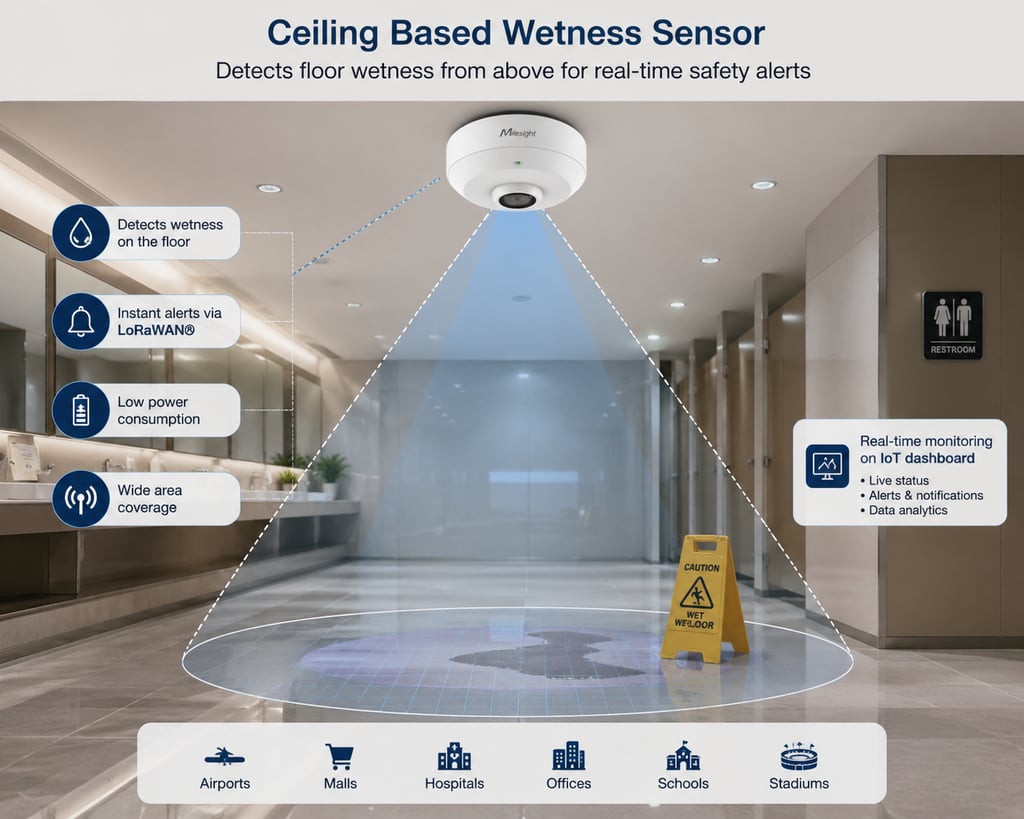
In today’s fast-evolving infrastructure landscape, smart restrooms are no longer a luxury—they are becoming a necessity. With increasing focus on hygiene, user safety, and operational efficiency, one critical innovation gaining momentum is the use of LoRaWAN-based wet floor sensors.
These sensors are redefining how facilities manage cleanliness, prevent accidents, and ensure real-time monitoring in high-footfall environments like airports, malls, hospitals, and corporate offices.
🚿 What Are Wet Floor Sensors?
Wet floor sensors are IoT-enabled devices designed to detect the presence of water or moisture on restroom floors. When integrated with LoRaWAN, they offer:
Long-range communication
Low power consumption
Real-time alerts
Seamless integration with cloud dashboards
Smart Hygiene Monitoring
Predictive Cleaning Systems
⚠️ Why Wet Floor Monitoring Matters in Smart Restrooms
Wet floors are one of the leading causes of slip-and-fall incidents in public spaces. Traditional manual monitoring is:
Reactive rather than proactive
Labor-intensive
Prone to delays
With smart restroom solutions, wet floor detection becomes automated, predictive, and data-driven.
🌐 How LoRaWAN Enables Smart Wet Floor Monitoring
LoRaWAN technology plays a key role in enabling scalable and reliable restroom monitoring systems.
Key Advantages:
Long Range Coverage
A single gateway can cover multiple restrooms across large facilities like airports. This also enhances the range for deployment of IoT for Facility Management.Battery Efficiency
Sensors can last for years without replacement.Minimal Infrastructure
No need for complex wiring—ideal for retrofit projects.Real-Time Alerts
Instant notifications via SMS, app, or dashboard when moisture is detected.
🧠 Smart Restroom Use Cases with Wet Floor Sensors
1. Airport Smart Washrooms
Airports handling thousands of passengers daily can use LoRaWAN sensors to instantly detect spills and alert housekeeping teams.
2. Corporate Offices
Enhance employee safety and maintain premium hygiene standards.
3. Hospitals & Healthcare Facilities
Critical for infection control and patient safety.
4. Shopping Malls & Public Spaces
Reduce liability risks and improve visitor experience.
🤖 AI + LoRaWAN: The Future of Smart Restrooms
Combining wet floor sensors with AI-powered Thermal camera analytics creates a hybrid smart restroom ecosystem:
AI detects visual wetness patterns
Sensors validate moisture presence
Data fusion improves accuracy
Predictive cleaning schedules
This approach is already gaining traction in next-gen infrastructure projects.
💡 Benefits of LoRaWAN-Based Wet Floor Sensors
✅ Improved safety and accident prevention
✅ Faster response time for cleaning staff
✅ Reduced operational costs
✅ Data-driven facility management
✅ Enhanced user satisfaction
🚀 Conclusion
LoRaWAN-based wet floor sensors are a game-changer in smart restroom ecosystems. They bring together safety, efficiency, and intelligence in a way that traditional systems simply cannot match.
As India rapidly adopts smart infrastructure and IoT-driven facility management, integrating wet floor monitoring into restroom solutions is not just an upgrade—it’s a necessity.
Innovate
Explore our IoT solutions for smart industries.
Connect
Engage
info@tynatech.in
+91-120-4370576
© 2026. All rights reserved.